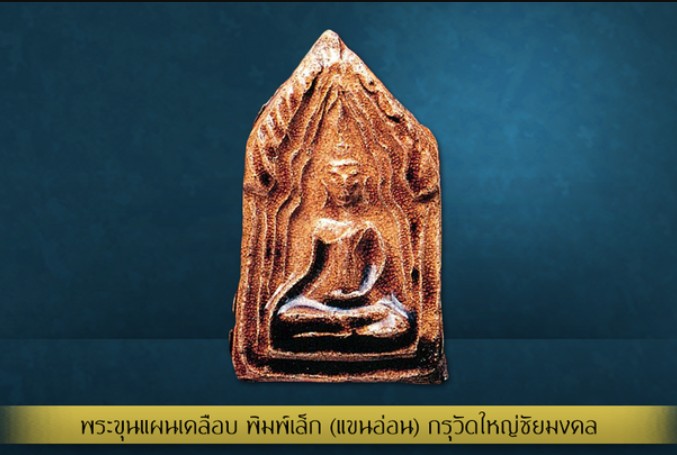
Khun Phaen amulet, glazed, from Wat Yai Chai Mongkol
.
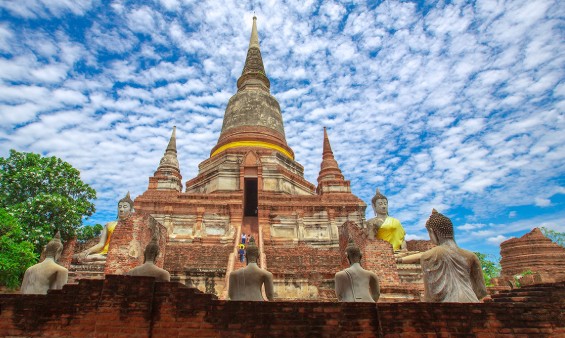
Wat Yai Mongkol, or "Wat Pa Kaew," is an important temple in the old capital. It was built in the early Ayutthaya period by King Ramathibodi I (King U Thong) around 1900 B.E. It's most notable landmark is the Chai Mongkol Chedi, which King Naresuan the Great commissioned around 1592 B.E. to commemorate his victory in the Elephant Battle against the Burmese Crown Prince.
.
.
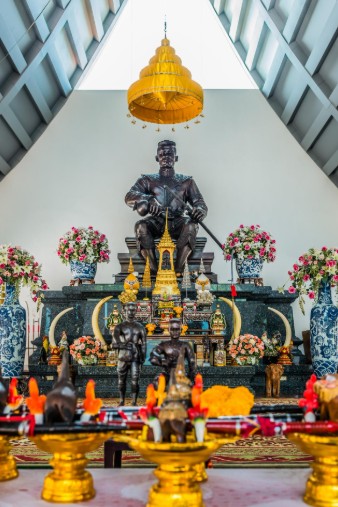
When His Majesty the King had won the battle and returned to the capital, he intended to punish the soldiers who had failed to catch up with him during the elephant battle. According to the law, the punishment would be death. However, Somdej Phra Phannarat of Wat Pa Kaew and 25 monks begged for a royal pardon for the soldiers, citing that he was like the Lord Buddha who was surrounded by demons before attaining enlightenment. This was a way of proclaiming his fame, bravery, and prowess, spreading throughout the kingdom.
.
.
.
King Naresuan therefore ordered the construction of a large chedi to symbolize his victory and kindness towards those soldiers, and bestowed the name Chaimongkol Chedi In the year 2135, he also had the idea to create many Buddha images and amulets. The famous amulet of Ayutthaya that His Majesty King Ong Dam created was the "Khun Phaen Klueab" amulet, which beautifully combined Sukhothai and Ayutthaya arts.
.
.
.
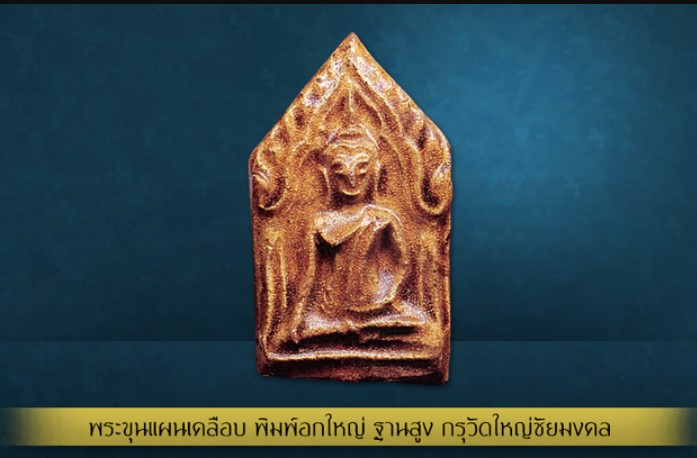
Khun Phaen amulet with glaze
.
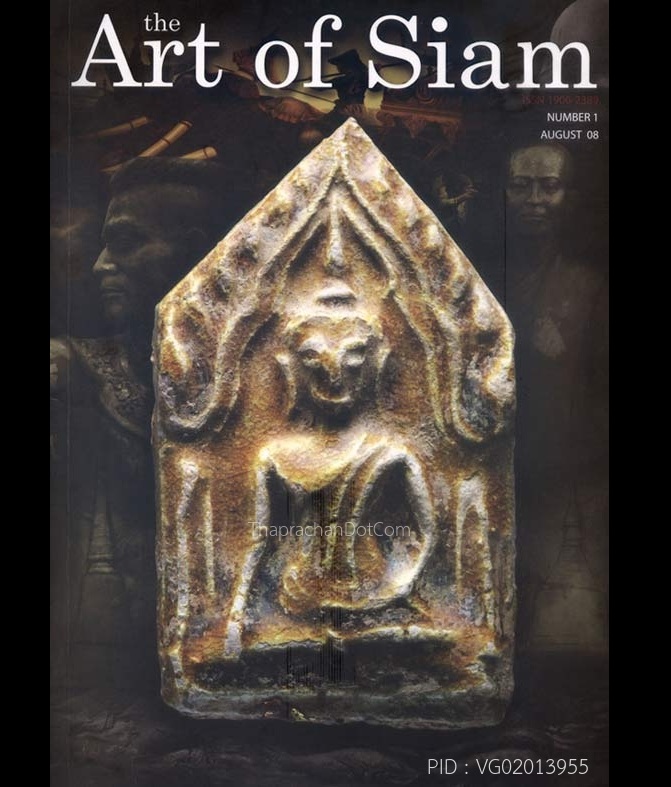
The Khun Phaen Klueab amulet was first created at the Wat Yai Chai Mongkol crypt. It has an interesting characteristic: it is a glazed tile amulet in the Mara Vijaya posture in a glass house arch. It is said that its distinctive feature is that the amulets in this crypt are made from white clay and glazed like ceramic, which is different from other amulets that are usually made from baked clay or lead alloy.
.
Amulets of this type have also been found at the Wat Sing Lai (Liquor Factory) and Wat Ban Krang crypts in Suphan Buri province. However, these were found without glaze, but instead were made from ordinary, new-colored clay (believed to have been created during the reign of King Naresuan the Great). This suggests that the glaze technique, influenced by Chinese influences, was adapted from Sukhothai, and cleverly adapted for amulet creation, embodying a unique and distinctive artistry. This is arguably a significant advancement in amulet creation during the Ayutthaya period.
.
.
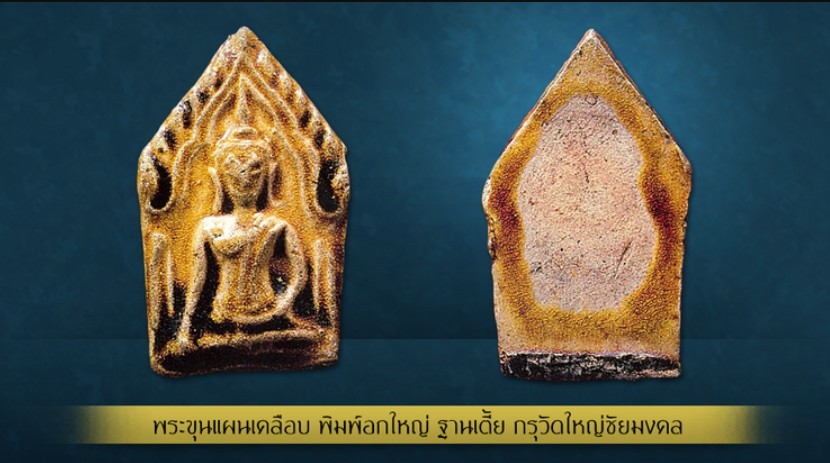
The Khun Phaen amulet is coated in the Mara Vijaya posture and is enshrined in a glass pavilion. Every amulet has a coated front, while the back is not coated, but almost every amulet has a handwriting.
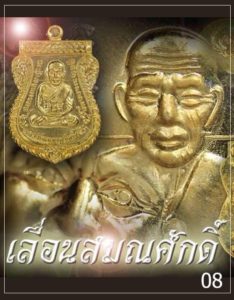
Khun Phaen amulet with glaze Every Buddha image will be coated. The coating will be a dark yellow. Some Buddha images have the coating chipped off due to age. The crevices of the Buddha image will be dark brown to black because the coating is thicker than other parts, making the color darker than other parts. The height is approximately 4.5 cm. The base is approximately 2.8 cm. wide. There are 3 types in total:
.
.
1. Large chest, high base
2. Large chest, low base
3. Soft arm print or small print
.
Every single glazed Khun Phaen amulet from every crypt possesses the supreme virtues of loving-kindness, popularity, invulnerability, and bravery. Khun Phaen amulets are considered rare and possess high virtues, making them considered among the most prestigious amulets of Ayutthaya.
.
.
.
.
.
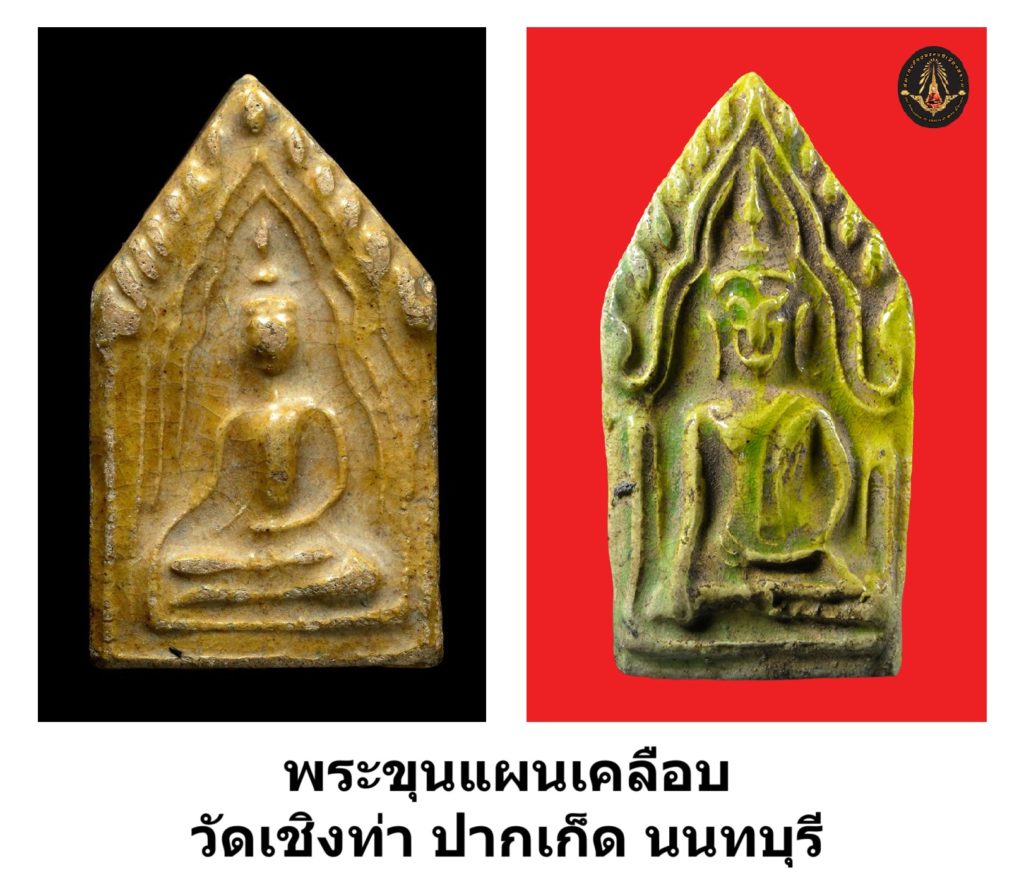
*In 2506, many Khun Phaen amulets were found at Wat Cheing Tha, Pak Ket District, Nonthaburi Province. They were the same type as those from Wat Yai Chai Mongkol in every respect, except that the glaze from Wat Cheing Tha was lighter in color. It is believed that the glaze had been eroded by water, causing the glaze to fade.
.
.
.
.
.
.
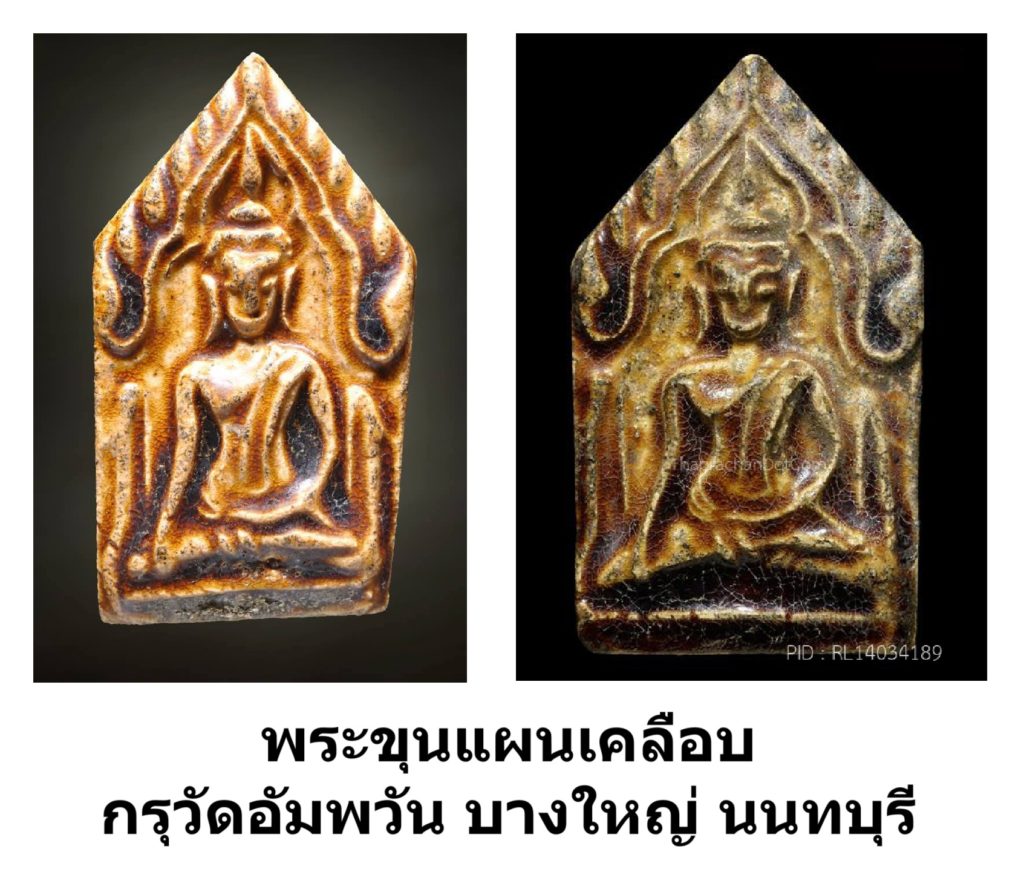
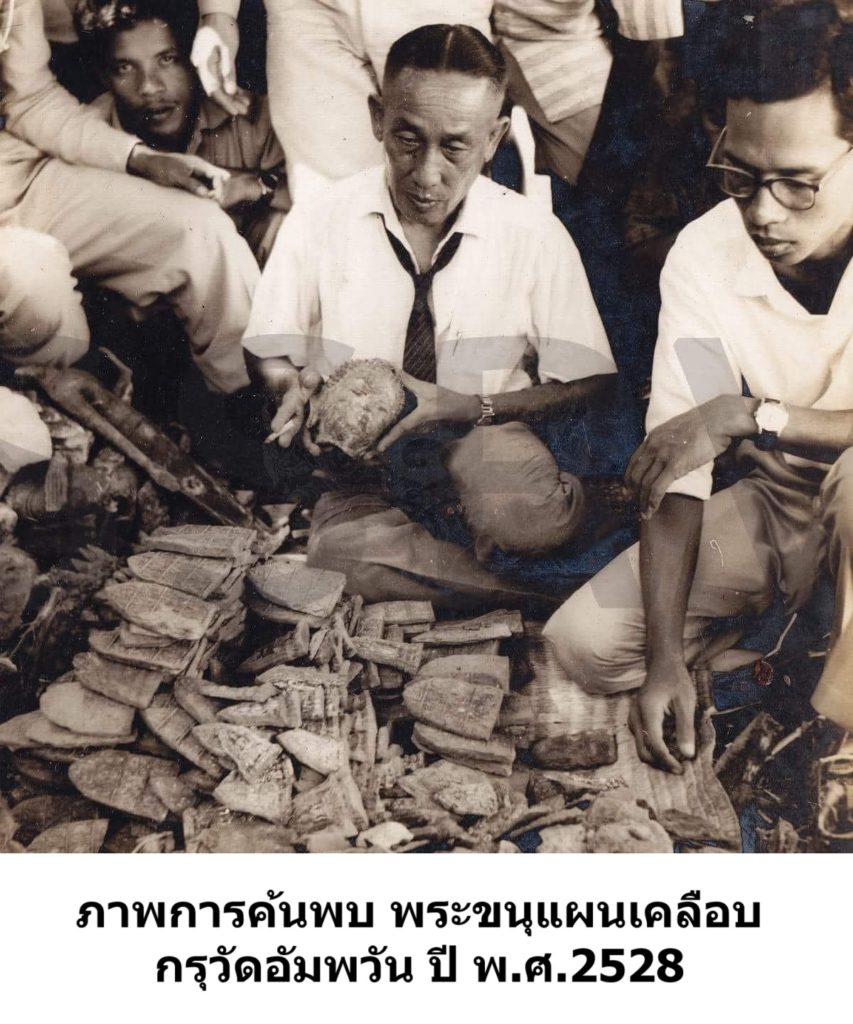
*In 2528, it was found again in Bang Yai Subdistrict, Nonthaburi Province, but there were not many. The characteristics of the glaze of this crypt are that the glaze is light green and has many sand stains. The shape is the same as Wat Yai Chai Mongkol in every respect.
.
.
.
.
.
.
Thanks for the information and pictures from…
.
Th.wikipedia.org
Pinterest.com
amuletssiam.org/
thairath.co.th/ Thai Rath
FB: Phrakhru Palad Duradet Khunwaro
FB: Phra Khun Phaen Klueb, Wat Amphawan
thaprachan.com / Thaprachan.com
prathaprachan-mag.com / Prathaprachan Magazine
samakomphra.com/Thai Amulet Enthusiasts Association