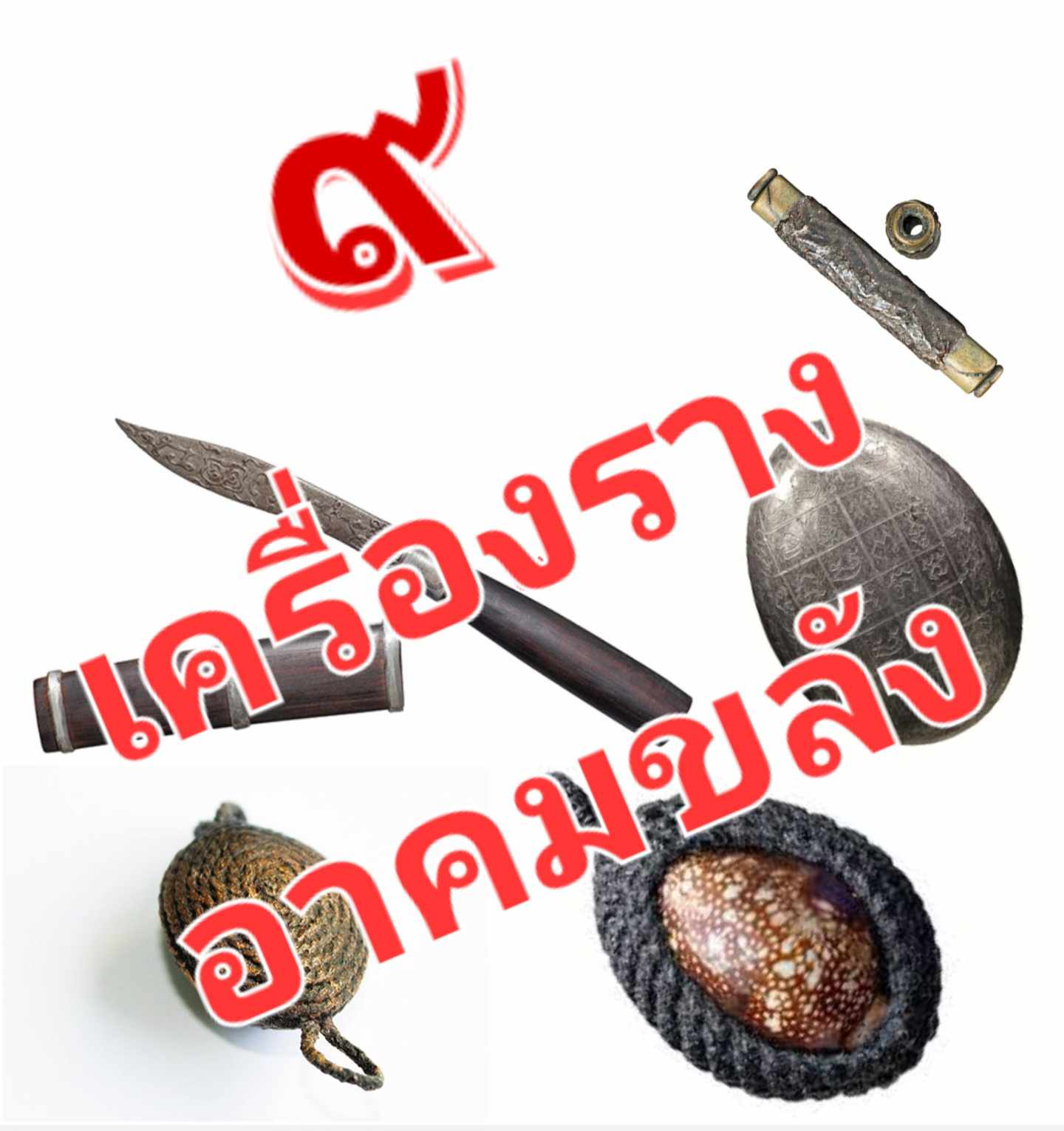
9 auspicious amulets, the greatest Buddhist magic of the era
9 amulets that are popular among collectors, who seek them out because of their faith in the sacred powers of famous monks and gurus since ancient times. Until the amulet collectors in the past wrote a poem to praise 9 valuable amulets that should be kept with you as follows…
"Good betel at Wat Nang, if the pawn is sacred, Wat Nai Rong
Teacher's stick, pair of Wat In, flying knife, Wat Nong Pho
Phisamon Wat Puangmalai, the evil-looking Wat Ton Luang
Rahu, head measurement pair (gold), character ring, Nong Bua Temple
The mineral at Bang Phai Temple has an incomparable power.
Nine things are auspicious and everyone should seek them out.
Carry it with you when you travel, so that no danger will dare to come near you.”
Let's get to know these 9 sacred amulets that have become the ultimate amulets that collectors wish to possess. With the belief in the power of Buddha, magic, and the belief that they have powerful magical powers, if anyone is lucky enough to possess even 1 piece, it is considered good. Especially if anyone has all 9, it is considered very auspicious, truly full of charisma.
Good amulet, sacred ceremony, famous monk, and the materials used to create it are considered very difficult to find, both minerals and sacred metals. The single-eye coconut shell is considered a sacred object with natural power.
.
.
.
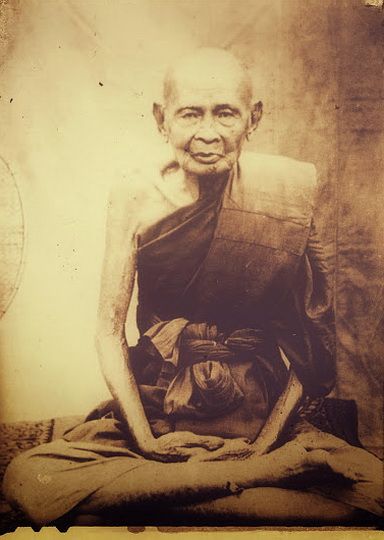
1. Good betel at Wat Nang (Luang Pu Eiam)
.
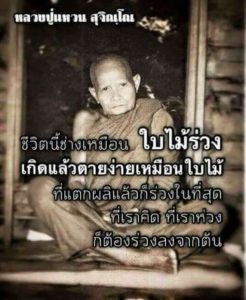
Luang Pu Aiem Suwannasaro
.
Luang Pu Eiam (Phra Phawana Koson Thera), former abbot of Wat Nang Ratchaworawihan, Bang Khun Thian District, Bangkok. He was a teacher whom King Rama V highly respected. At first, he was an ordinary abbot, but he had miraculous powers in creating amulets and talismans, to the point that their reputation reached the Grand Palace.
.
Checkers : Dead betel palm
.
The betel nuts used in the consecration ceremony must be from dead betel trees, i.e. trees that have died standing, even though the land in that area is healthy and has no sign of disease. This piece of dead wood is considered to fit the formula and is suitable for making amulets.
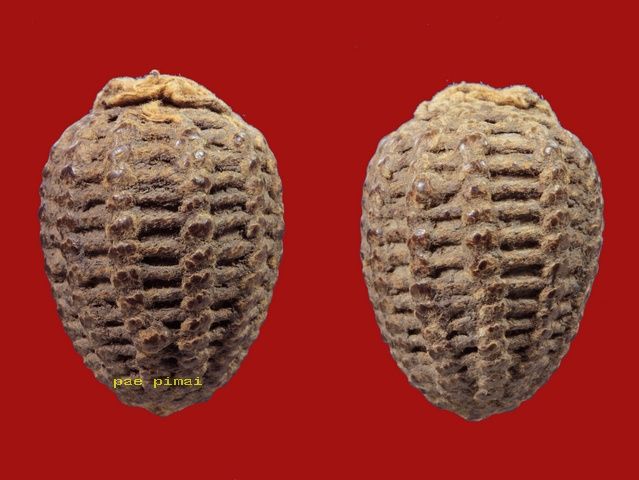
Mak Tui uses young betel nuts of an appropriate size. When picking them up, you must go up facing east and recite a mantra each time. When picking up any betel nut, you must stare at that betel nut and chant a mantra, then put the betel nut in your mouth to pick up. When you have picked it up, you must open the cap and scoop out the inside to make it clean. Then fill it with a sacred relic pellet.
When finished, the sacred numbers “Na Pathamang” are inscribed along with the heart of the Triple Gem “Ma A U”, the abbreviated names of the Five Buddhas “Na Mo Put Tha Ya” and the heart of Maha Ut “Ud Thang Attho” are written on ancient Sa paper and placed in a betel nut and sealed with underground beeswax to seal it tightly. A blessing ceremony is performed. The chanting must be performed until the betel nut stands upright, then it will be considered successful. After that, it is wrapped with string, a loop is made on top, and the surface is coated with lacquer and used for hanging around the neck.
Mak Tui is considered a powerful amulet that helps protect from dangers. It is prominent in terms of invulnerability, invulnerability, escaping danger, protecting from black magic, and protecting from ghosts and demons. The incantation used with Mak Tui is the incantation of the Five Buddhas. Keep chanting “Na Mo Put Tha Ya” to keep your mind in a state of asceticism and concentration.
.
.
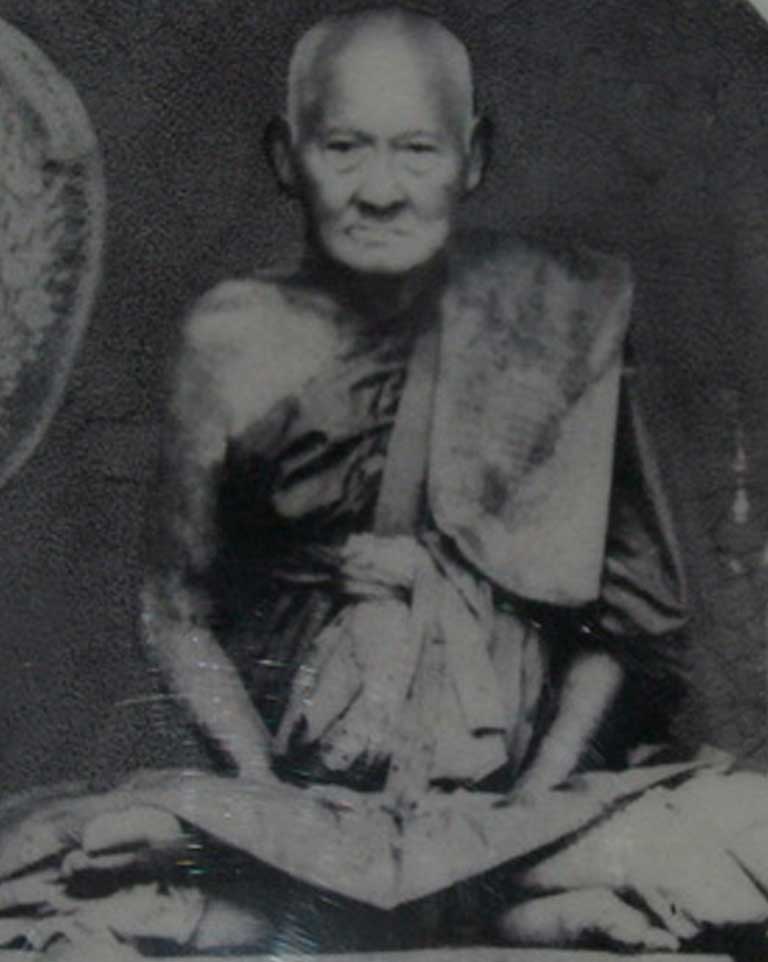
2. Magical cowrie shells from Nai Rong Temple (Luang Pu Rot)
.
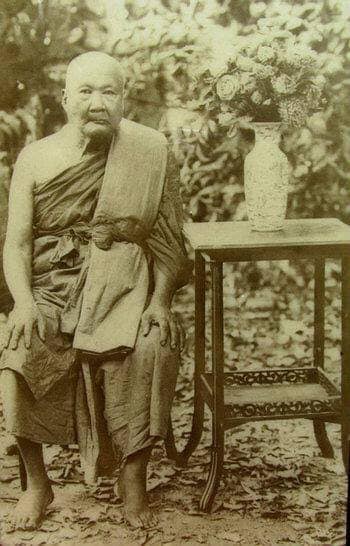
Luang Pu Rod, Nai Rong Temple
.
Luang Pu Rod, a revered monk who has many disciples. Luang Pu Rod studied the art of making sacred objects, Takruts, Biea Kae, Yantra Cloth, and Pra Chiat Cloth from Luang Pu Khaek, Wat Bang Bamru, which is not far from Wat Nai Rong, Tambon Bang Bamru, Bang Khon Noi District, Bangkok.
.
The King of Bia Kae
.
For the cowries that will be used according to the texts, turn the cowries upside down to look at the mouth groove. Inside the mouth there will be small teeth arranged in a row. The cowries must have 16 teeth on each side, for a total of 32 teeth, in order to pass the selection and be considered to have all 32 conditions. Also, the back of the cowries must have a continuous "Na Pat" line running across from head to back. When the cowries have been selected according to the texts, 1 baht of mercury, which is a shiny white liquid metal, is taken to the ceremony.
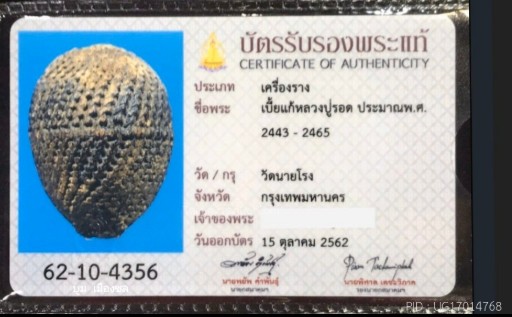
Luang Pu Rod would spend the evening performing a blessing ceremony, casting spells on the mercury until it moved back and forth. Then he would call the mercury to flow into the shell. Then he would use specially prepared underground beeswax to plug the mouth of the shell. Then he would cover it with lead, hammer it into a flat sheet, inscribe the 16 Buddha Yantras, the Trinisinghe Yantra, and hammer it into shape, then cover it with another layer. If the worshipper wanted to carry it with them, they would usually weave a rope to close the shell, making a loop to make the rope mark for convenience.
Luang Pu Rot's amulet is considered a powerful amulet in every aspect. It can protect against various dangers, black magic, people who put spells on it, or ghosts. You can use the amulet to make holy water. If you worship it, ask for the Buddha's blessing to turn bad things into good things, to be safe, and to be invulnerable. It is very good.
.
.
.
3. Teacher's Wood, Inthara Temple Pair (Teacher's Wood Takrut, Luang Pu Phu)
.
Reverend Grandfather Phu, Intharawiharn Temple
.
Luang Pu Phu Chanthakesaro (Phra Khru Thammanukun) is the abbot of Wat Intharawihan in the Phra Nakhon district of Bangkok. He is the foremost disciple of Somdet Phra Phutthachan (To). He is a person who is close to and has received the transmission of many magical knowledge. Luang Pu Phu is a monk with high compassion, who can understand the future and the past. He makes it a practice of ascetic practice. His famous amulets are the Father Khru's walking stick and various Somdej amulets which have great Buddhist power and are very popular.
.
.
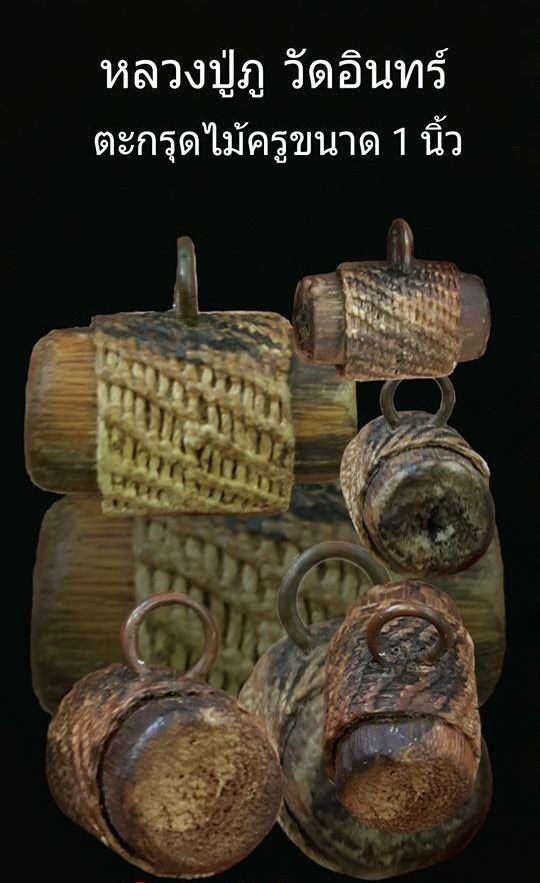
Teacher's wooden amulet : Lightning Rod
.
The magical object that Luang Pu Phu created from ripe bamboo that was struck by lightning and had to fall down and extend to the east, and he had to sit and watch for 7 days. If a herd of elephants came down and crossed the bamboo, it would be considered a very auspicious sign. This bamboo can be used. Luang Pu will perform a ritual to inform the gods, the Lord of the Land, and the spirits of the land before asking to cut the bamboo to take only the tip of 3 segments. When he got the bamboo, he poked it on a strong corpse, which was a corpse that died on a Saturday and was cremated on a Tuesday, to complete 7 corpses. It is said that it took him 30 years of asceticism to accomplish this. Then he split this log into small pieces called “tak” to put the name* that he received from above, filled with sacred powder. Some might also contain vulture bones, covered with underground beeswax, hammered with wooden wedges to close it, and then inscribed with characters again to complete the ceremony.
This teacher's stick is considered the best teacher's stick, which is included in the set of 9 sacred amulets that shake the land, "Pointing at the beginning to die, pointing at the end to live". It can be used to protect oneself in times of crisis, preventing thieves, black magic, and ghosts and demons from daring to intrude, which has been proven by many people who have owned it.
*There is a legend about the creation of the teacher's stick that says...
Luang Pu Phu would look up at the sky for a long time, sometimes not for long. A disciple once asked Luang Pu Phu, “Why do you look up at the sky?”
He replied… I am waiting for the name from above.
When the name is received from above, the monk will insert the name into the prepared wood and fill it with various sacred powders according to the steps until it is completed as a unique teacher wood.
Spell of the Master's Wood
Namo(3. I go for refuge to the Buddha. I go for refuge to the Dhamma. I go for refuge to the Sangha.
Let's go, let's go, Kingkarachang, Ahangpitang Chanami, Chanami, four people walk forward, five people walk behind. Omkarang, Karang (3 ends)

.
Courtesy of...
2.g-pra.com/
Pinterest.com
Watnairong.com
Sarakadee.com
Komchadluek.net
horoscope.kapook.com/
FB photos of famous monks
Fb- Siam Mongkon / SiamMongkon
thaprachan.com / Thaprachan.com